Conference appearance · Liverpool · 17 November 2026
Cadyn Lewis at Music Mark 2026 in Liverpool
Cadyn Lewis spoke at the Music Mark Conference in Liverpool on 17 November 2026, presenting From Artist to Infrastructure at 20: Building the business around the craft. Drawing on his experiences as recording artist KDYN and founder of Origins Inconclusive, he shared what helped him get started, what he is still learning and how working with other artists continues to shape his own music.
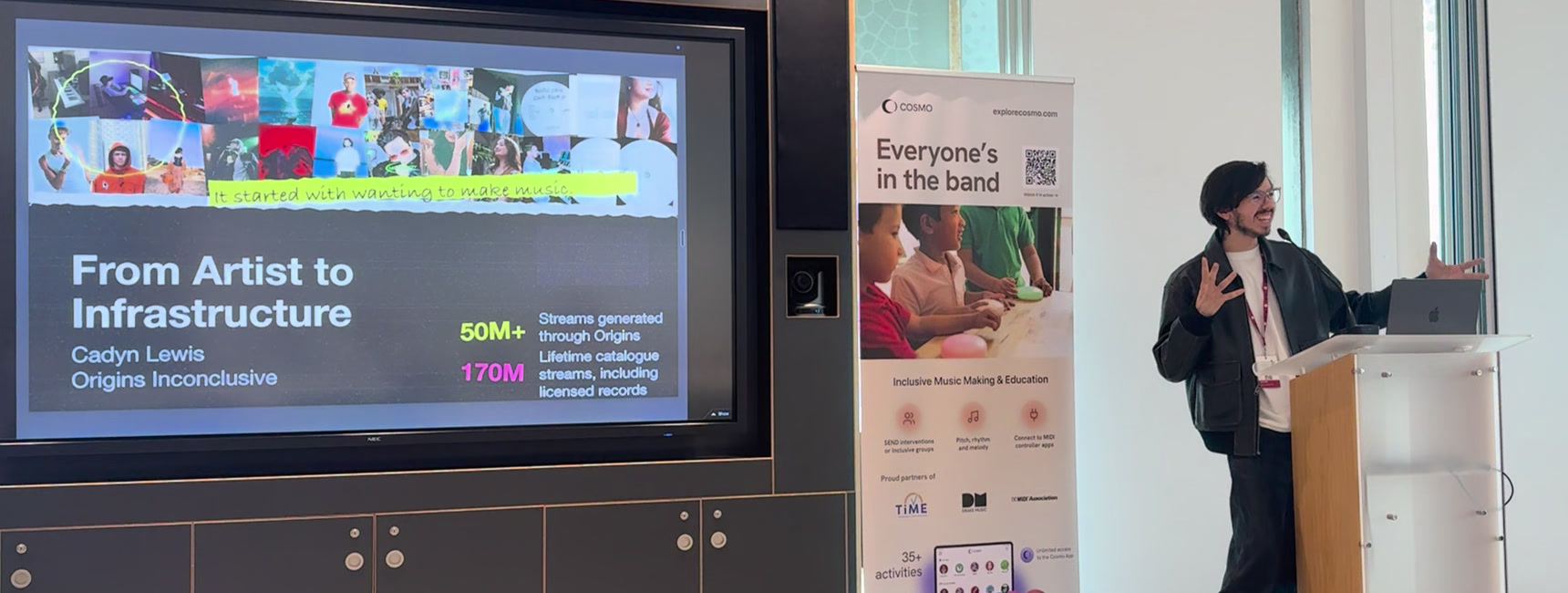
He demonstrated the Artist Launchpad, inviting delegates to work through a barrier facing a young musician or their own practice. Questions from the room explored how he learnt production, what support he would have valued and whether building the businesses had helped his own music.
Finding his way into music
Cadyn’s interest in DJing began at around eleven, when his mum introduced him to DJ EZ. Watching him perform made Cadyn want to try it himself. He sold Minecraft graphics to save for his first decks, then began making music and sending it to labels.
One of the emails he shared was written when he was thirteen, asking for a clip of his music being played at a gig he was too young to attend. Later, a conversation at Monstercat’s Amsterdam Dance Event showcase led to a relationship with Armada Music Publishing.
Cadyn encouraged young artists to start those conversations and share what excites them about their music. He recognised the confidence it can take to approach someone, particularly when you are still finding your direction.
His time with EMI brought studio sessions and collaborations that helped him develop his sound. He also spoke about going through his recording agreement with his lawyer, understanding what he had committed to deliver and deciding his next step.
Learning alongside the artists at Origins
Putting out Bootie Grove’s Haze, Origins’ first release in November 2023, meant finding out what Bootie wanted from the record, working through the music and artwork, and helping it find listeners. Cadyn used that example to talk about learning what support an artist needs through the work of a release.
He also reflected on the responsibility of being the person offering an agreement. He is studying law to understand contracts better and described making more time for conversations with artists before they sign, so there is room to ask questions and work through the commitments together.
The artists bring their own ideas and skills to the label. Cadyn gave the example of someone with visual skills helping another artist develop a project.
Keeping places for music to grow
When DiscoverNü announced plans to close, artists responded with memories of it being one of the first places to support their music. Cadyn contacted the founder with a proposal to keep it going and preserve the community already there. Origins went on to acquire the platform, which continues to cover emerging artists beyond the label’s own roster.
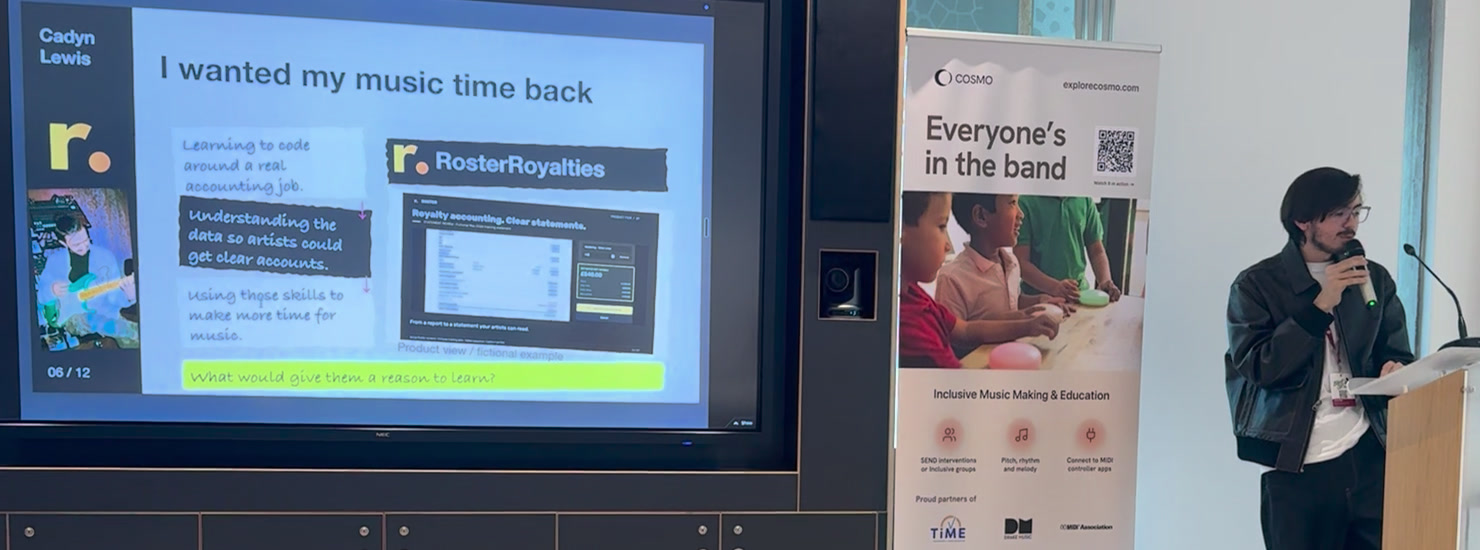
Royalty accounting was also taking time away from recording and working with artists. Handling different statements and currencies led Cadyn to learn to code and build RosterRoyalties, with the aim of making the tools accessible to other small labels too.
His slide put it plainly: “I wanted my music time back”. For the artists, monthly statements meant being able to follow their accounts and see what the label spent on their releases. “At the end of the day, it’s their music,” he said.
After losing his home workspace, Cadyn approached Chichester District Council about finding somewhere to record. An office conversion became Studio Inconclusive: a home for his own music and the Origins roster, with access for local musicians. He spoke about understanding the costs so the space could stay affordable.
Questions from the room
Before taking questions, Cadyn used the studio experience in the Launchpad exercise. His first step had been to ask someone with local knowledge. Delegates were invited to think about whom they could approach for help with the barrier they had chosen.
“I don’t always need to be the solution,” he said. The exercise encouraged people to check what support already existed, ask who could help and try one small action before committing to something larger.
Asked what would have helped him earlier, Cadyn spoke about having trusted advisers and, alongside professional legal advice, someone to talk to who had been through similar experiences.
Another educator asked how he had learnt production and mixing, mentioning young people using FL Studio. Cadyn’s answer was YouTube and hours spent experimenting until he found a sound he liked.
A further question asked whether building the businesses had helped his own music. For Cadyn, the creative relationships have been a large part of that experience:
“I feel way more inspired because I’m able to surround myself with incredible creatives.”
He spoke about the different voices and sounds those artists bring to his production, and how hearing where they need support helps him decide what to work on next.
The session closed with Musicians Rights UK, which offers free guides to rights, royalties and music paperwork. The Artist Launchpad is also available for anyone who wants to return to the exercise or use it with someone they support.
Thank you to Music Mark for the invitation, and to the educators who joined the session, asked questions and brought their own experiences to the conversation.
View the session in Music Mark’s conference programme. If you attended and would like to follow up, get in touch with Cadyn.